Date: 27 Sep 2026
Location: Reynolds & Linda
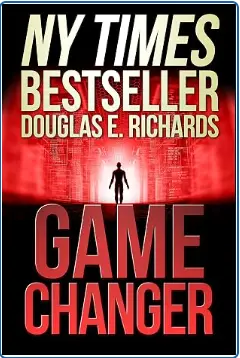
A cozy group of eight gathered at our home to discuss our book for the month. We were evenly divided, four had read the book and four had not. Even so, we all were able to participate in the discussion. The story was a medical murder mystery but the basis for the story was the working of our brains, and this was the part of the book I really enjoyed and which we could all discuss.
The book begins with a Secret Service agent, Kevin Quinn, assigned to the Presidential detail, attempting to kill the President of the United States. He had chosen to poison his drink, but when it appears that the President’s wife is going to sample it first, he doesn’t want her to die, and shoots the glass out of her hand.
Quinn’s motivation for killing the President was his witnessing of the President torturing his wife and ultimately killing her for what she knew about the President’s dark side, where he was having his way with women in a secret chamber. The women were well paid and none remembered what had happened because the President had available a drug which would erase the last 12 hours of a person’s memory. After explaining why he had to kill his wife, the President then used the drug on Quinn, but it didn’t work as well on him and, as his memory returned, he had weeks to plan and carry out his plan to kill him.
While Quinn is running to keep ahead of his pursuers, another thread in the story begins to develop. He becomes convinced by trusted friends that he was never married and his memories of his wife’s torture and death were somehow implanted in his brain.
That is the Game Changer in this book – the ability of someone to implant memories in the brain. This is something that science has not yet been able to do but this is a story of what may happen if (and when) this was possible, and this is where we begin to learn how our brains actually function. In particular, how memories are formed, and how this process produces memories that we “know” are true but are not – they are created by our brains to fit our past experiences and to help us cope with future events.
We began the discussion with a quote from the book, one of the examples of our brain in action that most everyone knows but we seldom think about: “… everything you see comes into your retina, and thus your brain, upside down, backwards, and two-dimensional. With a sizeable blind spot in the center.” When polled, everyone said that they saw no black hole in the center of their vision, therefore everyone’s brain was working well, at least for this function.
Continuing with the story. After accepting that he has been acting on a false memory, Quinn learns that the person who implanted his false memory and tried to kill him, is also after someone else. This brings him into contact with Rachel Howard, the world’s recognized authority on neurobiology of human memory, and it is through her that we learn about the brain, the conscious and unconscious parts, and their role in making us who we are and preparing us to successfully deal with future dangers.
This leads us into the areas where research is being done and funded to implant memories into the brain and discussions of how this technology, as all technologies, can be used for good or ill. These areas are within the intelligence agencies of the US and Israel and things are pointing towards one of the Israeli agents as being the one who has actually developed this capability. As things come out into the open and people accept that this technology is here now, the bad guys are dealt with and then the discussion becomes what to do now. It is finally decided to use this for good by implanting memories that it would take many years for a person to achieve on their own and use that knowledge for good.
One thing I had not mentioned that plays a role in the development of the story puts the saying “fly on the wall” into a new perspective, but you will have to read the book to learn about it.
Do not stop reading at the end of the story. Make sure you read the material used by the author to tell the story. This is where you will find the research that has been done that has led us our current understanding of how the mind works and where you will find the basis for statements like:
“Mis-attributions in remembering are surprisingly common. Sometimes we remember events that never happened.”
“Most of what we do and think and feel is not under our conscious control.”
“Our minds don’t reflect reality. There really is no objective reality but what our minds make of the data coming in through our senses.”
And finally, “We all know human memory isn’t great, but what is jaw-dropping to me is that not only is our memory unreliable, it is unreliable even when we’re absolutely certain we’ve gotten it right.”
Gina recommended a book for next month, Her Hidden Genius by Marie Benedict but we still need to find a place for the meeting. We adjourned to the kitchen where we had a nice supper and continued our discussion. All in all, a pleasant way to spend an evening.
— Reynolds